


Discovery of a Lamont, Oklahoma Territory 1902 Red Seal

This story was first published in the February 2026 issue of Bank Note Reporter.

The discovery of a Lamont, Oklahoma, territorial provided by Jess Lipka has the best attributes going for an Oklahoma or Indian territory issue. Specifically, a minuscule circulation from a small, short-lived bank in a town that hardly anyone has ever heard of. In the case of this Lamont note, not only is it the first territorial note reported from the bank, but it is also the first note of any kind reported.
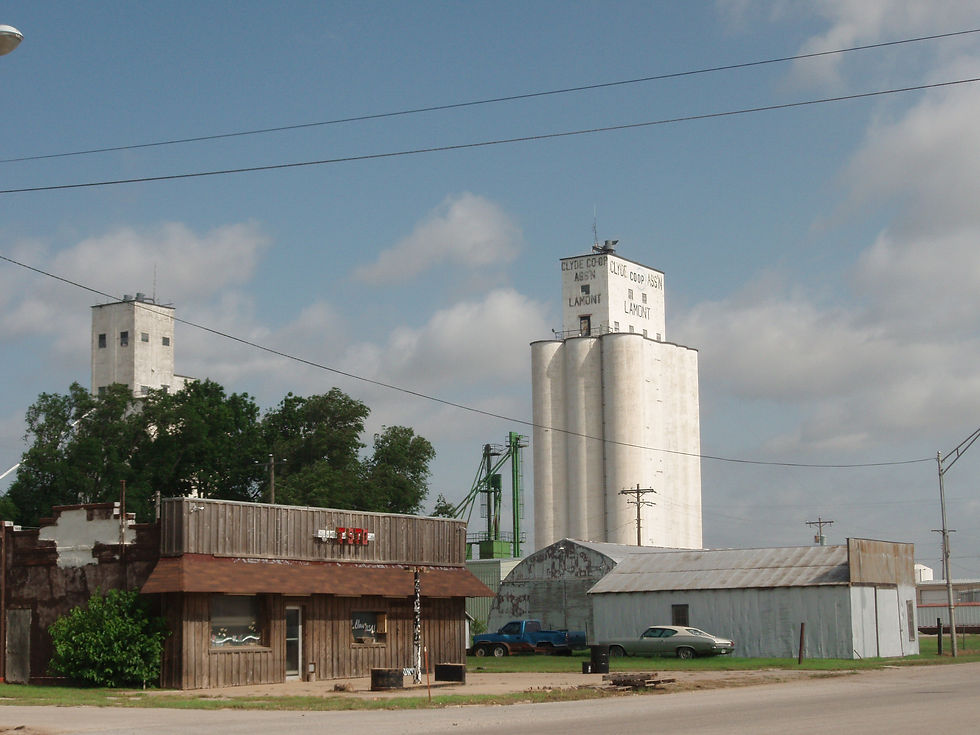
Lamont is in north-central Oklahoma on east-west U.S. 60, about 12 miles west of north-south I-25. It is situated about midway between Wichita, Kansas, and Oklahoma City. It is an agricultural town with mostly modest housing and boarded-up commercial buildings, and its 2020 population of 417 is declining. The city had a population of 474 in 1907, which peaked at 635 in 1910.

The area encompassing Lamont was opened to homesteaders during the Cherokee Strip Land Rush on September 16, 1893. W.F. Shamleffer and W.W. Dunaway from Council Grove, Kansas, selected the townsite and, under the name of Lamont Townsite Company, founded the community.
Its post office dates from December 15, 1893. The town was incorporated under territorial law on June 19, 1900. The Blackwell, Enid and Southwestern Railroad reached Lamont on November 15, 1900.
Thusly, Lamont developed as an agricultural community along the railroad. Outbound shipments eventually included wheat, livestock, and watermelons. Beginning in
1929, townspeople held an annual watermelon festival in September.
In 1905, the First National Bank was organized on June 3, chartered on June 10, and opened on June 14. The bank was liquidated as a national bank three years later, on August 31, 1908, and reorganized as the First State Bank of Lamont. A.C. Thompson and L.H. Thompson served, respectively, as president and cashier throughout. They built their circulation to $25,000. During the bank’s short life, 800 sheets worth of Series of 1902 red seal 10-1010-20 territorials were issued through it, followed by 78 sheets of state notes that arrived in 1908, following statehood on November 16, 1907.
Lamont was named after Daniel S. Lamont (1851–1905), who was Secretary of War during President Grover Cleveland’s second term from March 5, 1893, to March 4, 1897. Lamont was a fellow Democrat from New York who served as Cleveland’s personal secretary and managed the White House’s daily affairs during the president’s first term.
Any relationship between Lamont and Oklahoma was remote. As Secretary of War, he possessed a progressive view toward Native Americans. Specifically, he advocated for the U.S. to end its wars against them and to release the Apache, who were held as prisoners at Fort Sill in southwestern Oklahoma Territory, and give them title to land for their use.


Comments